.png?w=615&h=171)
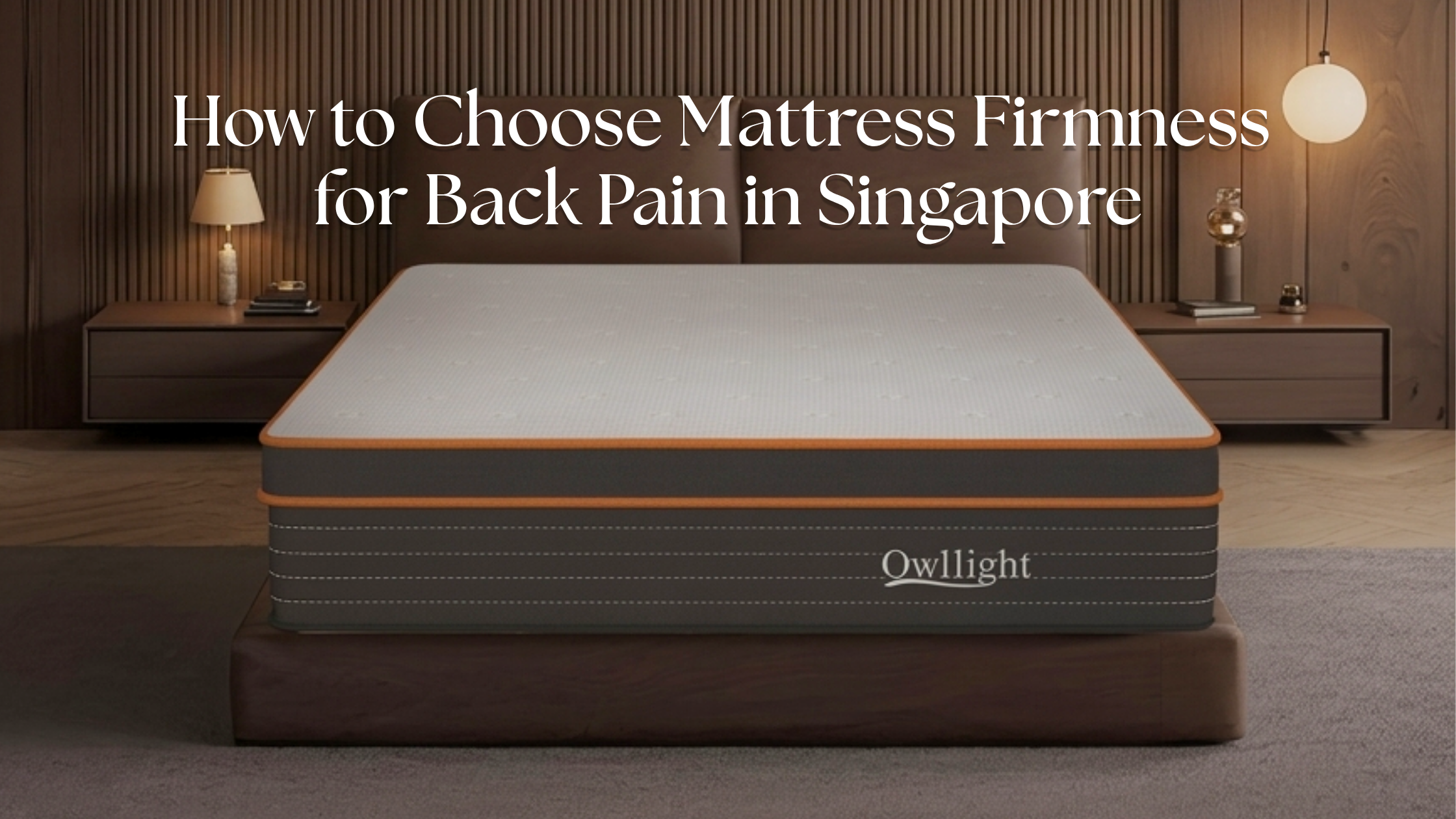
"Get a firm mattress for back pain" is outdated advice. The right firmness depends on your sleep position: side sleepers need medium to medium-firm, back sleepers need medium-firm, stomach sleepers need firm. What matters more than firmness is zoned support — different parts of your spine need different levels of resistance. Here's how to choose correctly.
If you've searched "best mattress for back pain Singapore," you've probably seen the same advice repeated everywhere: get a firmer mattress. It's not wrong exactly — but it's incomplete. And for a lot of Singaporeans, it leads to buying the wrong mattress and ending up with the same morning stiffness they were trying to fix.
This guide breaks down how firmness actually works, what your sleep position changes, and why zoned support matters more than a single firmness rating.
The Firmness Scale — What the Numbers Mean
Most mattress brands rate firmness on a 1–10 scale. Few use it consistently, so treat it as a rough guide:
- 1–3 (Soft): You sink in significantly. Body contouring is strong. Little pushback. Good for lightweight side sleepers with no spinal issues.
- 4–5 (Medium): Moderate sink with some support. Good for side sleepers who need hip and shoulder cushioning.
- 6–7 (Medium-Firm): Supportive surface with light contouring. The most widely recommended range for back pain. Works for back sleepers and most side sleepers.
- 8–10 (Firm): Minimal sink, strong pushback. Good for stomach sleepers and heavier individuals. Can cause pressure points at the shoulder for side sleepers.
The catch: a mattress rated "7/10" by one brand might feel like another brand's "5/10." Ratings aren't standardised. This is why testing in a showroom matters more than the number.
Why "Just Get a Firm Mattress" Is Wrong Advice
The idea that firm equals better for back pain comes from a time when mattresses were either hard (spring divans) or soft (foam). In that binary, firmer was usually better for most people.
Modern research tells a more nuanced story. A landmark study published in The Lancet found that medium-firm mattresses — not firm — produced better outcomes for chronic low back pain. Participants on medium-firm mattresses reported less pain during lying in bed, less pain on rising, and less disability compared to those on firm mattresses.
The reason: a mattress that's too firm doesn't allow the hips and shoulders to sink enough. Your spine ends up bowed rather than neutral. For side sleepers especially, a firm mattress creates a pressure arch at the hip and shoulder — the exact opposite of proper spinal alignment.
Best Firmness by Sleep Position
Side Sleepers
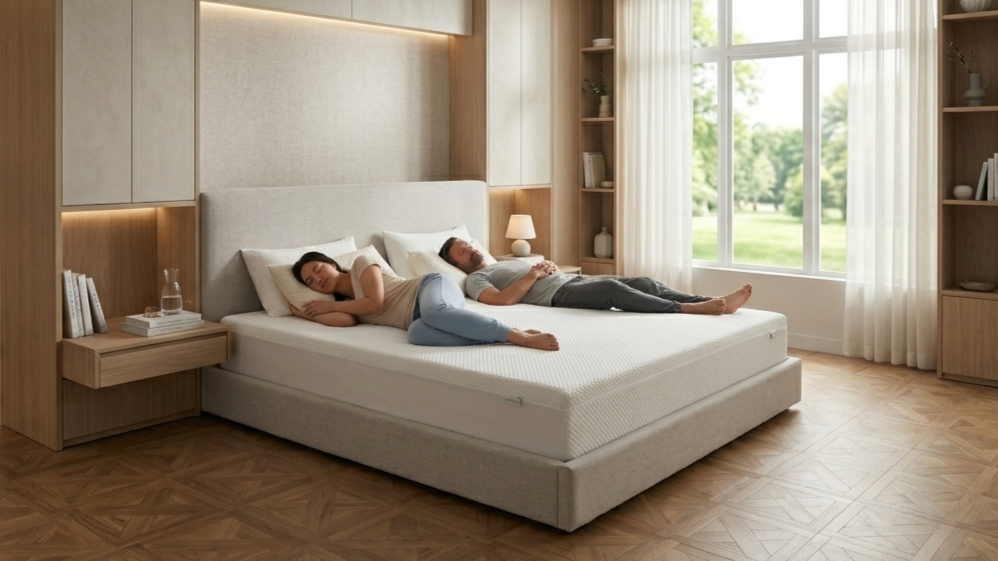
You need cushioning at the hip and shoulder so your spine can stay straight. A mattress that's too firm creates a lateral arch — your spine curves sideways overnight. Most side sleepers with back pain do best on medium (4–5) to medium-firm (6–7).
The heavier you are, the more cushioning you need to prevent the hip from being pushed upward. If you're under 65kg, medium-firm usually works. Above 80kg, medium or a zoned mattress that's softer at shoulder and hip but firmer at the lumbar is ideal.
Back Sleepers
Back sleeping is the most spinal-neutral position — when the mattress is right. You need firm enough support under the lumbar so the curve isn't lost, but soft enough at the shoulders that you're not lifted off the surface. Medium-firm (6–7) is the standard recommendation.
Watch for the gap test: lie on your back and try to slide your hand under your lower back. If there's a large gap, your mattress is too firm and your lumbar isn't supported. If there's no gap and your back feels pushed up, it's too soft.
Stomach Sleepers
Stomach sleeping is hard on the lower back — your pelvis sinks, creating a lumbar arch. A firmer mattress (7–8) minimises this by keeping the hips more level. Stomach sleeping with back pain is generally not recommended regardless of mattress, but if you can't break the habit, go firmer.
Combination Sleepers
You move between positions through the night. Medium-firm (6–7) is usually the safest choice — it provides enough support for back sleeping and enough give for side sleeping. Zoned mattresses help more here than a uniform firmness.
Why Zoned Support Matters More Than Firmness
This is the most important point most buying guides skip.
A single firmness number describes the average feel of a mattress surface. But your body isn't uniform. Your shoulders are wider than your waist. Your hips are heavier than your calves. Your lower back needs support at the exact point where your spine has its natural curve.
A zoned mattress provides different support levels in different regions. The Owllight Tulip Hybrid uses a 5-zone pocket spring system: each zone — shoulder, upper back, lumbar, hip, and leg — has springs calibrated specifically to that body region's needs.
This means a side sleeper gets cushioning at the shoulder without sacrificing lumbar support. A back sleeper gets maintained lumbar curve without the shoulder being pushed up. The same mattress works correctly for both — because it's not one firmness, it's five calibrated zones.
For someone with chronic back pain, this distinction is the difference between waking up stiff and waking up recovered.

Does Singapore's Humidity Affect Firmness Feel?
Yes — and this is underreported.
Memory foam and some gel foams change feel with temperature. In a cool air-conditioned room (18–22°C), foam feels firmer. In a warmer room (26–28°C) or on a humid night, the same foam softens. If your mattress feels different in summer versus dry season, this is why.
Pocket spring mattresses are less temperature-sensitive — spring tension is mechanical, not material-based. If you keep your room at a consistent temperature with air conditioning, this is less of an issue. If you sleep in a naturally ventilated HDB room, a pocket spring core is more predictable night to night.
How to Test Firmness Before You Buy
The 10-minute showroom test is more useful than any firmness rating:
- Lie in your usual sleeping position for at least 5 minutes. Not 30 seconds — you need the mattress to respond to your weight.
- For back pain, have someone check your spinal alignment from behind. Your spine should be roughly straight in side position, and your lumbar should have slight contact with the mattress in back position.
- Pay attention to pressure points — hips, shoulders, knees. Any sharp sensation means the firmness isn't matched to your position.
- Try the 100-night trial if available. The showroom tells you a lot, but living with a mattress for two weeks tells you more.
See the Tulip Hybrid — firmness zones, specs, and current pricing →
Visit the Owllight showroom — 22 Sin Ming Lane, Singapore →
Frequently Asked Questions
Is a firm mattress better for back pain?
Not necessarily. Research published in The Lancet found medium-firm mattresses produced better outcomes for chronic low back pain than firm mattresses. A mattress that is too firm can prevent the hips and shoulders from sinking adequately, causing lateral spinal curvature for side sleepers. Medium-firm (6–7 out of 10) is the most widely recommended firmness for back pain across sleep positions.
What mattress firmness is best for side sleepers with back pain?
Side sleepers with back pain generally do best on medium to medium-firm mattresses (4–7 out of 10). The mattress needs to allow the hip and shoulder to sink enough for the spine to remain straight. A mattress that is too firm creates a lateral arch at the lower back. A zoned mattress — softer at the shoulder and hip, firmer at the lumbar — is ideal for side sleepers with chronic back pain.
What is a zoned mattress and why does it help back pain?
A zoned mattress provides different firmness or support levels in different regions — typically shoulder, lumbar, hip, and leg zones. This allows the mattress to cushion pressure points (shoulder, hip) while maintaining firm support where the spine needs it (lumbar). For back pain sufferers, zoned support is more effective than a uniform firmness because different parts of the body have different support needs.
Does Singapore's humidity affect how firm a mattress feels?
Yes. Memory foam and gel foam change in feel with temperature and humidity — softening in warmer, more humid conditions. If you sleep in a naturally ventilated room without consistent air conditioning, a pocket spring mattress has more predictable, temperature-stable support than a foam-only mattress.
If your current mattress is too soft, the simplest fix is an extra-firm topper to add the support back.