.png?w=615&h=171)

The best mattress for an elderly person in Singapore is medium-firm with zoned support, strong edge support, and enough pressure relief at the hip and shoulder. Medium-firm keeps the spine neutral without making it hard to change position. A reinforced edge gives a stable surface to push off when getting in and out of bed. Cooling matters here too — older skin and Singapore's humidity make overheating a real disruptor of sleep. The Owllight Tulip Hybrid covers all four with its 5-zone pocket spring, 8cm reinforced edge, and 6-layer cooling build. For a parent whose current mattress is still sound but too soft, a firm topper is the lower-cost route. If your parent has a diagnosed back, hip, or mobility condition, check the choice with their doctor or physiotherapist first.
What Actually Matters in a Mattress for Older Adults
As we age, a few things change at once. Joints get stiffer, skin gets thinner, circulation slows, and getting in and out of bed takes more effort than it used to. A mattress that worked fine at 45 can become a daily struggle at 75 — not because the sleeper changed overnight, but because the margins for error got smaller.
For an ageing parent, the right mattress does five jobs: it keeps the spine aligned, it relieves pressure at the bony contact points, it gives a firm edge to sit and push off from, it doesn't trap heat, and it makes changing position easy rather than effortful. Most mattresses do one or two of these well and ignore the rest. The goal is a build that does all five.
Below, each of those factors, what to look for, and why it matters more for older sleepers than younger ones.
Support: Medium-Firm, Not Hard
The common assumption is that older people need a very firm mattress. They don't. A 2015 study published in the Journal of Chiropractic Medicine found that medium-firm mattresses were associated with better sleep comfort and less back pain than firm ones for most adults. Firm mattresses force the hips and shoulders to bear weight at single points, which is exactly what you want to avoid as joints become more sensitive.
What older sleepers need is neutral spinal alignment — the natural lumbar curve supported, not flattened, and not allowed to sag. That's a support-quality question, not a firmness-number question. A zoned support system handles it better than a uniform surface, because it can be firmer under the lumbar region and more forgiving under the shoulders and hips.
The Tulip Hybrid uses a 5-zone Pro-S pocket spring system — head, shoulder, lower back, hips, and knees each get a different spring profile. The lumbar zone is firmer for structural support; the shoulder and hip zones give more, so the bony points aren't fighting the surface. The result is medium-firm overall, with the spine held neutral regardless of how your parent sleeps.

Pressure Relief: Protecting Thin Skin and Stiff Joints
Pressure relief and support are different problems, and older sleepers need both. Support keeps the spine straight; pressure relief stops the hips, shoulders, and heels from being compressed against a surface that won't accommodate them.
This matters more with age for two reasons. Thinner skin and reduced subcutaneous fat mean less natural cushioning over bony areas. And older adults often move less during the night, so they spend longer in one position — which concentrates pressure rather than spreading it. Persistent pressure is uncomfortable at best, and for less mobile or bedbound seniors it's a genuine skin-health concern that a clinician should advise on.
A good hybrid handles this with a contouring comfort layer above a supportive core. The Tulip's 4D Air Fiber and cooling foam layers sit above the pocket springs — the surface gives at the contact points while the springs do the structural work beneath. For a parent who already has a supportive mattress but wakes with hip or shoulder soreness, the orthopedic mattress considerations covered here are worth reading alongside this.
Edge Support: The Factor Most Buyers Forget
For an older person, edge support isn't a comfort feature — it's a safety feature. Getting in and out of bed usually starts with sitting on the edge, then pushing up to stand. If the edge collapses under weight, the surface becomes unstable exactly when balance is most vulnerable.
A reinforced edge gives a firm, stable platform to sit on and push off from. It also means the full width of the mattress stays usable — important in a tight HDB master bedroom where the bed fills most of the room and sleeping near the edge is common. A sagging edge over years of use pulls the spine out of alignment night after night.
The Tulip Hybrid has an 8cm reinforced edge running the full perimeter. For a parent who needs a steady surface to rise from, this is one of the most practical specs on the mattress — and one most brands don't mention because their builds don't have it.

Ease of Getting In and Out
Two things govern how easy a bed is to enter and leave: the firmness of the surface and the height of the bed off the floor.
A surface that's too soft makes rising hard — the sleeper sinks in and has nothing to push against. This is another reason medium-firm beats plush for older adults: it gives a stable base to lever off. The reinforced edge compounds the benefit, providing a defined sitting point that doesn't give way.
Bed height is the other half, and it's about the bed frame, not the mattress. For most older adults, the ideal is feet flat on the floor with hips slightly higher than knees when seated on the edge — roughly 55 to 65cm from floor to mattress top, depending on the person's height. If your parent's knees are higher than their hips when sitting on the edge, the bed is too low and standing up is harder than it needs to be. Worth measuring before you assume the mattress is the problem.
Firmness: How to Choose Without Guessing
Firmness ratings describe the surface's starting tension, not how it responds to a specific body. A 55kg person and an 85kg person experience the same mattress very differently. For older sleepers, the practical targets are:
- Lighter or frail seniors — slightly softer, so the shoulder and hip can sink enough for pressure relief. A surface that's too firm leaves them perched on top with no contour.
- Average build — medium-firm is the reliable middle. Zoned support matters more than the exact firmness number.
- Heavier seniors — medium-firm to firm, because a softer build compresses too far under their weight and lets the hips sag.
If your parent's mattress is still structurally sound but simply too soft, you may not need to replace it. A firm topper can restore support at a fraction of the cost. If their needs sit between standard firmness options — common when a couple has different builds or one partner has a back condition — Owllight's custom firmness options let you specify the firmness rather than settle for the nearest off-the-shelf rating. Our guide on choosing mattress firmness for back pain walks through the trade-offs in more detail.

Temperature: Why Cooling Matters for Older Sleepers
Singapore's climate is a sleep problem for everyone, but it bites harder with age. Older adults regulate body temperature less efficiently, and overheating fragments sleep — more waking, less deep sleep, more discomfort. In a year-round humid climate, a heat-trapping mattress works against an older sleeper every single night.
The answer is structural airflow, not chemical cooling treatments that fade. The Tulip Hybrid is built around this with what Owllight calls its 6 layers of coolness — an Aerosilk Tencel cover that wicks moisture, 4D Air Fiber with 360-degree airflow, and cooling foam layers above the pocket spring core, which itself lets heat dissipate through the coils. The point isn't the marketing name; it's that the cooling comes from how the mattress is built, so it doesn't wear off.
For a parent whose current mattress is supportive but sleeps hot, a cooling topper is again the targeted, lower-cost fix rather than a full replacement.
New Mattress, Topper, or Adjustable Base?
Not every situation calls for a new mattress. Matching the fix to the actual problem saves money and gets a better result.
- Mattress is old, sagging, or over 8–10 years — replace it. Support degrades long before a mattress looks worn out, and a sagging surface is actively pulling the spine out of line.
- Mattress is sound but too soft, too firm, or sleeps hot — a topper addresses the specific gap (firmness or cooling) for far less than a full replacement.
- Mobility, circulation, or breathing conditions are involved — an adjustable base that raises the head or legs can help, but this is a medical-comfort decision best made with your parent's doctor or physiotherapist.
For a parent with a diagnosed back, hip, or mobility condition — or anyone experiencing severe, persistent pain or numbness — speak to their doctor or physiotherapist before changing their sleep setup. A mattress supports good sleep posture; it doesn't replace clinical care.
Buying for an Ageing Parent: A Caregiver's Checklist
If you're choosing on a parent's behalf — common in Singapore's multi-generational households — a few practical points make the decision easier:
- Involve them if you can. Comfort is subjective, and a mattress they had no say in is one they may resist using. Where possible, let them feel the surface in their own sleeping position.
- Use the trial period. A few minutes in a showroom tells you little. Owllight mattresses come with a 100-night trial — enough time for the body to actually adjust and for the right answer to become clear.
- Check the bed height, not just the mattress. The easiest in-and-out improvement is often the frame, not the mattress.
- Mind the pillow. A good mattress with the wrong pillow still leaves neck and shoulder tension. Match the two.
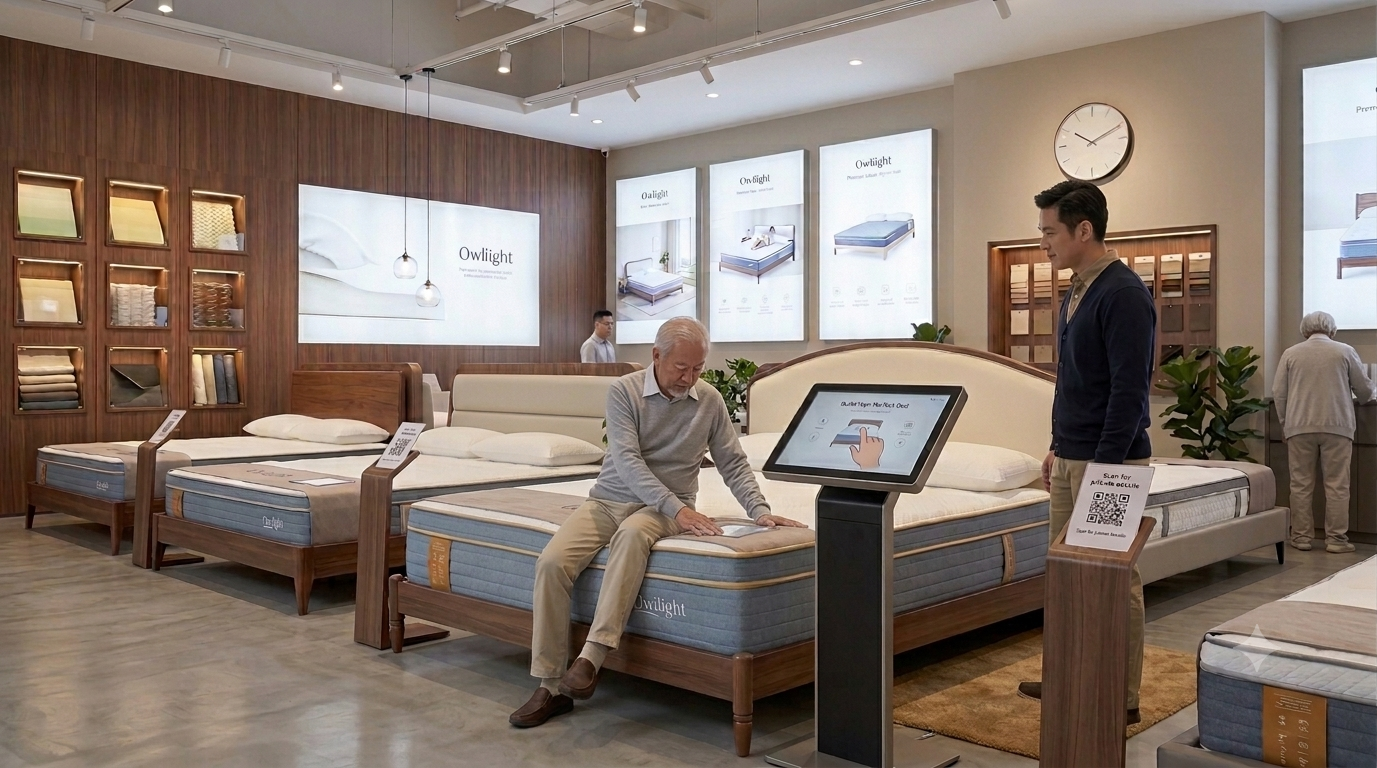
If you're weighing options for an older parent, the Tulip Hybrid covers the four factors that matter most for this age group — zoned support, pressure relief, edge stability, and structural cooling. See current sizes and pricing here, or visit the Owllight showroom so your parent can try the surface before you decide.
Frequently Asked Questions
What is the best mattress firmness for elderly people?
Medium-firm suits most older adults. It keeps the spine neutral without making it hard to change position or get out of bed, and it relieves pressure at the hips and shoulders better than a hard mattress. Very firm surfaces concentrate weight at the bony points; very soft surfaces make rising difficult. Lighter or frail seniors may do better slightly softer; heavier seniors slightly firmer. Zoned support matters more than the exact firmness number.
Are firm or soft mattresses better for seniors?
Neither extreme. Research generally points to medium-firm as the best balance of support and comfort for most adults, and that holds for older sleepers. A firm mattress can create pressure on stiff joints and thin skin; a soft one makes getting in and out of bed harder and lets the spine sag. The practical answer is a medium-firm mattress with zoned support and a reinforced edge.
Why does edge support matter for elderly mattresses?
Getting out of bed usually starts with sitting on the edge and pushing up to stand. A weak edge collapses under weight, making the surface unstable when balance is already vulnerable. A reinforced edge — like the Tulip Hybrid's 8cm perimeter — gives a firm, stable platform to sit on and rise from, and keeps the full width of the mattress usable.
Should I buy a new mattress or a topper for my elderly parent?
It depends on the current mattress. If it's old, sagging, or over 8–10 years, replace it — support degrades before wear shows. If it's structurally sound but too soft or sleeps hot, a firm or cooling topper fixes the specific problem for much less than a full replacement. If a medical condition is involved, check with their doctor or physiotherapist first.
Is the Owllight Tulip Hybrid suitable for elderly sleepers?
Yes. Its 5-zone pocket spring keeps the spine neutral while relieving pressure at the hips and shoulders, the 8cm reinforced edge gives a stable surface to get in and out of bed, and the 6-layer cooling build addresses Singapore's humidity — which disrupts older sleepers more than younger ones. For a parent with a diagnosed back, hip, or mobility condition, confirm the choice with their doctor or physiotherapist before buying.