.png?w=615&h=171)
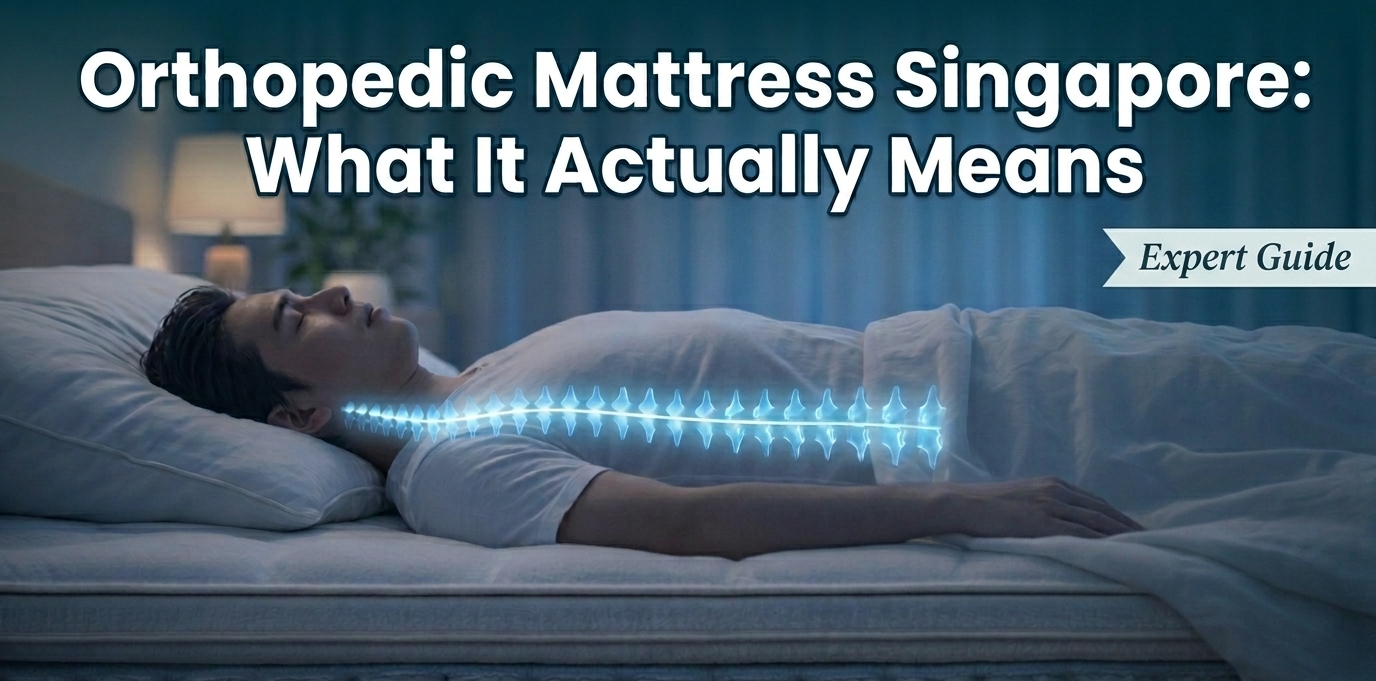
"Orthopedic mattress" is not a regulated term. Any brand can put it on a label without any clinical evidence. What actually determines whether a mattress is genuinely good for your back is the construction — specifically, whether it provides zoned support that keeps your spine in neutral alignment through the night. Here's what to look for, and how to separate real back-care engineering from marketing language.
Walk into any mattress store in Singapore or browse any major platform and you'll find "orthopedic mattress" attached to products at every price point. A $299 foam mattress on Lazada. A $2,500 showroom bed. An HDB-ready "ortho topper" sold three for $89.
They cannot all be orthopedic in any meaningful sense.
The word is useful for marketing because it sounds medical. It implies clinical validation that most of these products don't have. And because there's no regulatory standard for it in Singapore (or most of the world), brands use it freely.
This doesn't mean the concept is useless. It means you need to look past the label and at the actual construction. A mattress that genuinely supports spinal alignment is real and worth buying. The label tells you nothing. The specifications tell you everything.
What "Orthopedic" Should Mean
Orthopedics is the medical field dealing with the musculoskeletal system — bones, joints, muscles, tendons, ligaments, and nerves. A genuinely orthopedic mattress, in the spirit of the term, would be one designed to support the musculoskeletal system during sleep: keeping the spine in neutral alignment, distributing weight to avoid pressure build-up at joints, and allowing the muscles that work all day to fully recover overnight.
That's a real engineering problem. The mattress industry has solved it in specific ways — none of which require the word "orthopedic" on the label.
The core mechanisms of genuine back-care mattress construction are:
- Zoned support: Different support levels across different body zones. Firmer under the hips and shoulders (where most weight sits), softer under the lumbar (where the spine curves and needs to maintain contact without being pushed out of alignment). A uniform surface — hard or soft — cannot provide this.
- Independent spring movement: Pocket springs that respond individually to localised pressure rather than distributing load across a shared base. This allows each zone to respond to the specific weight above it without affecting adjacent zones.
- Appropriate firmness for sleep position: "Firmer is better for your back" is a persistent myth. The right firmness depends on your sleep position. Side sleepers need the hip and shoulder to sink enough to keep the spine lateral — too firm creates lumbar strain. Back sleepers need lumbar contact maintained — too soft creates a hammock curve. Stomach sleepers need firm support under the pelvis.
- Durability of the support structure: A mattress that provided good support when new but has developed body impressions two years in is no longer doing anything useful for your back. The quality of spring and foam construction determines how long the support structure holds.
These are the things worth checking. "Orthopedic mattress" on a label confirms none of them.

What to Actually Look For on a Spec Sheet
When evaluating whether a mattress is genuinely designed for back care, ask these questions:
Is the spring system zoned? A mattress labelled "orthopedic" with a single-tension spring base is not providing zoned support regardless of what the marketing says. Look for zone count (5-zone is the standard for back-care construction) and whether firmness varies across the zone map.
Are the springs independent? Pocket springs (individually wrapped) vs bonded/interconnected springs. Pocket springs are the meaningful construction for back care. Interconnected springs move together — when one compresses, adjacent ones are affected.
What are the foam comfort layers made of? CertiPUR-US certification is the most reliable third-party standard for foam quality, emissions testing, and durability. It's not a manufacturer claim — it's independent verification. A mattress with CertiPUR-US certified foam has been tested for durability, which affects how long the support structure holds.
What does the 10-year warranty actually cover? Many warranties cover manufacturing defects but not sagging below a certain depth (often 3cm or more). A 2cm body impression already significantly disrupts spinal alignment. Read the warranty terms, not just the headline number.
Is there a genuine trial period? It takes 3–6 weeks for your body to adjust to a new sleep surface. A 100-night trial allows you to evaluate whether the mattress is actually working for your back, not just how it feels in the first week. Brands that don't offer a meaningful trial period are limiting your ability to verify their claims.
The Singapore Context
Back pain from desk work and WFH posture is one of the most common complaints among working adults in Singapore. Physiotherapy clinics in the city see significant caseloads of lumbar and cervical pain attributable partly to sleep surfaces and sleep positions.
At the same time, Singapore's climate creates a specific constraint: mattresses that work well in temperature-controlled European bedrooms often trap heat in Singapore's humidity. A mattress that's great for back support but causes you to overheat will still disrupt sleep — and sleep disruption itself worsens musculoskeletal recovery.
This is why back-care mattress selection in Singapore needs to account for both the spinal support construction and the thermal properties of the materials. Open-cell foam and air fiber layers maintain breathability. Pocket springs allow air to circulate through the coil layer. Solid memory foam, while sometimes marketed as orthopedic, retains heat in a way that actively works against comfortable sleep in a humid environment.
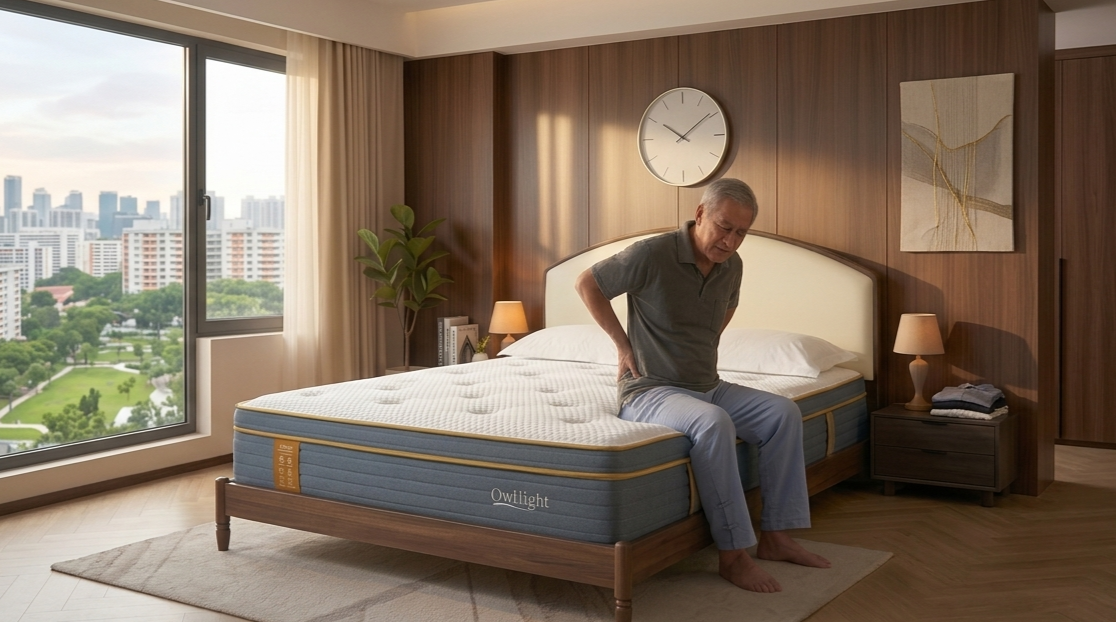
Why Owllight Doesn't Use the Word
Owllight's positioning is clinical back care, that's the entire reason the brand exists. The Tulip Hybrid was built around one problem: people in Singapore waking up with back pain from their mattress.
But you won't find "orthopedic mattress" plastered across Owllight's product pages. The reasoning is straightforward: the term proves nothing, and customers who've been burned by it before are right to be sceptical.
What you will find: a 5-zone pocket spring layout with the zone map specified, CertiPUR-US certified foam layers, 4D Air Fiber for breathability, a 100-night trial, and a 10-year warranty. These are verifiable claims. They tell you exactly how the mattress is engineered and what standards the materials have been tested against.
If those specifications match what genuinely orthopedic design requires — zoned support, independent springs, certified materials, long-term durability — that's not coincidence. It's the point.
See the Tulip Hybrid's full construction specs →
If the current mattress is structurally sound but too soft for back pain, try the 3D Back Care topper as a step before a new mattress.
A Practical Checklist Before You Buy
| What to Check | What a Good Answer Looks Like | Red Flag |
|---|---|---|
| Spring type | Independent pocket springs | "Ortho spring" with no construction detail |
| Zone count | 5-zone or more, with zone map shown | "Zoned support" with no specification |
| Foam certification | CertiPUR-US certified | No third-party certification mentioned |
| Trial period | 90–120 nights | 30 days or less — not enough time to evaluate |
| Warranty sagging threshold | 1.5cm or less | 3cm or more — already affecting alignment before warranty kicks in |
| Breathability | Pocket spring + open-cell or air fiber layers | Solid memory foam as the primary construction |
FAQ
- Is "orthopedic mattress" a regulated term in Singapore?
- No. It's not regulated in Singapore or most countries. Any brand can use it without clinical evidence. The term tells you nothing about the mattress's actual construction. What matters is the specification — zone count, spring type, foam certification, trial period.
- What should I actually look for in a back-care mattress?
- Independent pocket springs with a 5-zone layout, CertiPUR-US certified foam comfort layers, breathable construction (air fiber or open-cell foam), a 100-night trial period, and a warranty that covers sagging at 1.5cm or less. These are verifiable claims. The word "orthopedic" on a label is not.
- Is a firm mattress better for back pain?
- Not by default. The right firmness depends on your sleep position. Side sleepers need enough give for the hip and shoulder to maintain spinal alignment. Back sleepers need lumbar contact. Zoned support — different firmness per body zone — is more effective than any single firmness level, regardless of whether it's marketed as firm or soft.
- How long does a back-care mattress last in Singapore?
- A quality pocket spring hybrid with CertiPUR-US certified foam should hold its support structure for 8–10 years. Singapore's humidity accelerates foam degradation compared to drier climates — lower-grade foam develops body impressions faster. Impressions of 2cm or more already significantly affect spinal alignment.