.png?w=615&h=171)
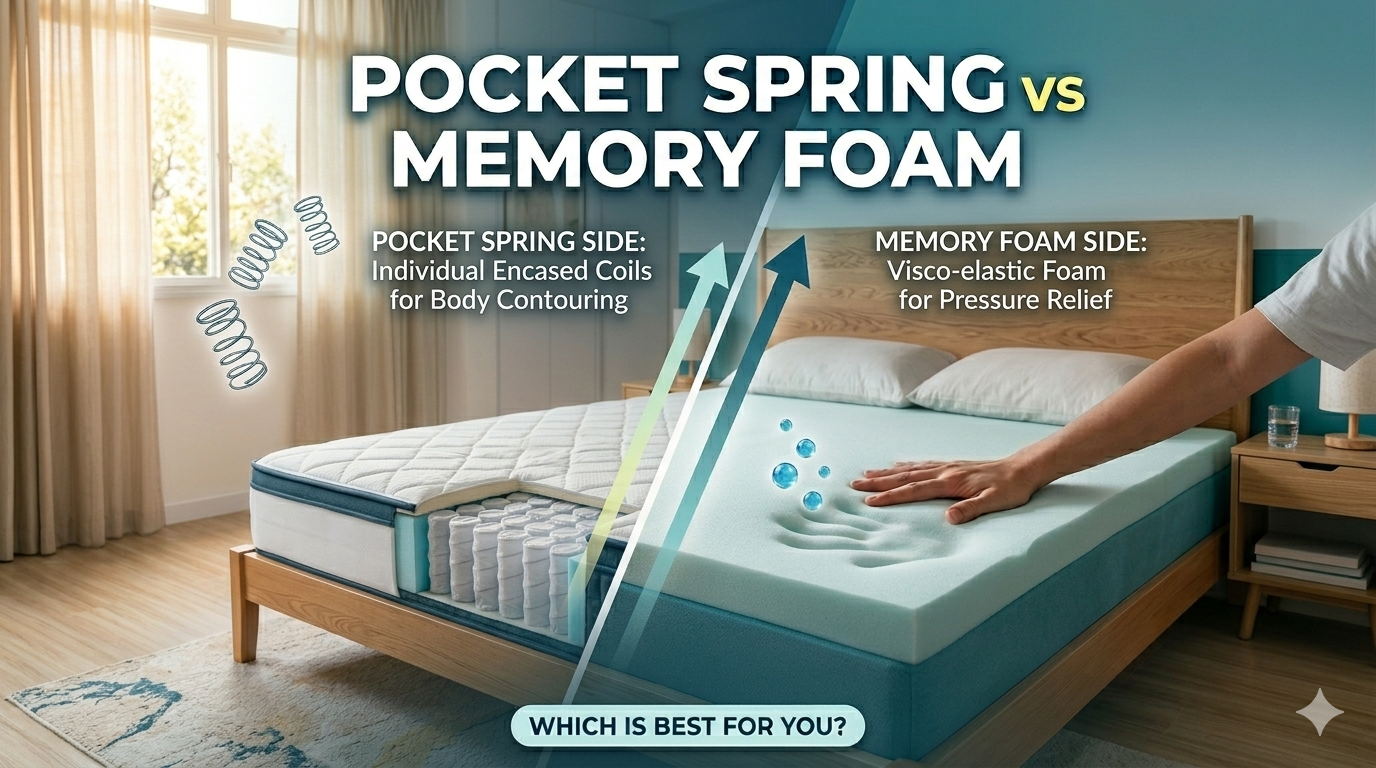
For back pain in Singapore, pocket spring wins — specifically a zoned pocket spring system. Memory foam conforms well but lacks the targeted support structure that keeps your spine neutral through the night. It also traps heat, which is a real problem in Singapore's climate. The best option is a hybrid: pocket springs for support, foam layers for comfort and pressure relief. Here's why, with the specs explained.
If you're shopping for a mattress for back pain in Singapore, you'll run into this question within the first ten minutes. Pocket spring or memory foam? Sales pages rarely give you a straight answer — they're written to justify whichever product the brand sells.
So here's a direct one, grounded in how each construction actually works.
How Pocket Springs Work
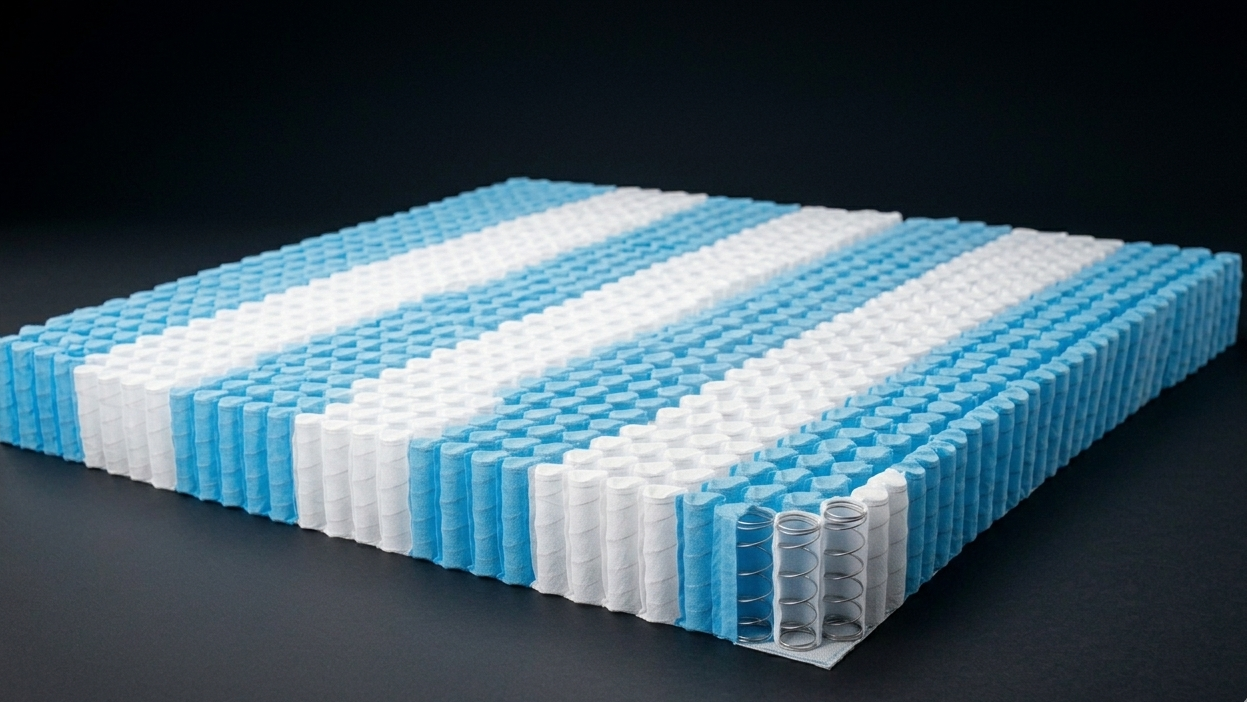
A pocket spring mattress uses individual coils, each wrapped in its own fabric pocket. Because they move independently, each spring responds to localised weight rather than distributing load across the whole surface.
This independence matters for back support. When your hips press into the mattress, the springs beneath them compress more. When your lower back which is lighter and more curved rests on the surface, those springs compress less. The result is a support profile that follows your body's shape rather than fighting it.
Zoned pocket spring systems take this further. The Tulip Hybrid's 5-zone pocket spring layout, for example, maps firmer spring tension to the hip and shoulder zones, where most body weight sits, and softer tension to the lumbar and leg zones. Your spine stays in neutral alignment without your muscles having to work to compensate through the night.
That's the work a good pocket spring system does. You don't feel it happening. You just wake up without the stiffness.
How Memory Foam Works
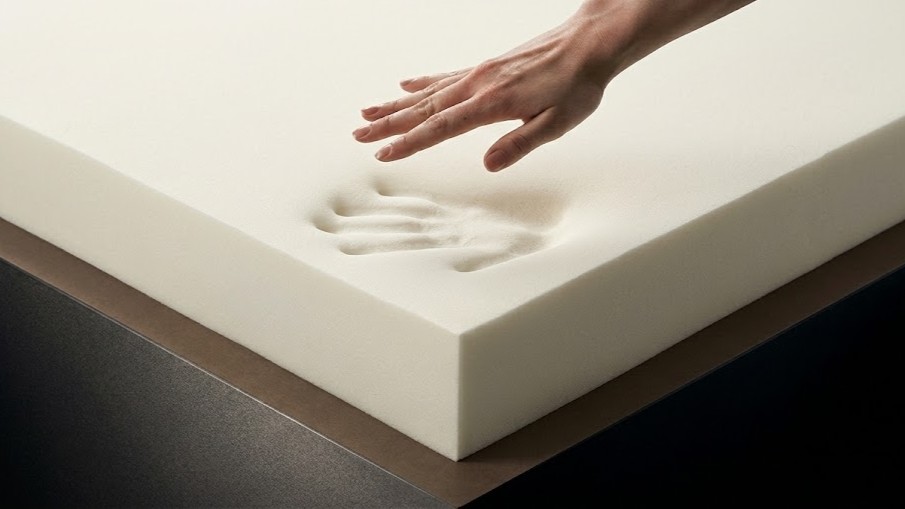
Memory foam is a viscoelastic material, it responds to both pressure and temperature, softening where your body makes contact and slowly returning to shape when you move. The "memory" effect is real: the foam moulds to your body's outline over the first 10–15 minutes of lying down.
This feels good. The contouring creates a sense of cradling, and for people with pressure point issues, sore hips, tender shoulders, the relief is immediate.
The problem is what happens over the next 7 hours.
Memory foam does not provide active support, it provides passive conformity. It distributes weight evenly, which reduces pressure but doesn't distinguish between zones. Your lumbar, which needs different support from your hips, gets the same surface response. If your lower back has a natural curve, memory foam will follow that curve. If the curve is healthy, that's fine. If it's not, if you've been sitting at a desk for 10 hours and your posture is already compromised, the foam will simply mirror the problem through the night.
Zoned support, which memory foam alone cannot replicate, is what actually addresses back pain systematically.
The Heat Problem
Memory foam traps heat. This is not a marketing talking point from competing brands, it's the nature of the material. Closed-cell foam structures limit airflow. Your body generates heat while you sleep. With traditional memory foam, that heat builds up at the contact surface through the night.
In Europe, this is manageable. In Singapore, where ambient humidity sits above 80% and most bedrooms run air-conditioning that dries rather than cools the air, it compounds. Many people who sleep on solid memory foam report waking damp, sweaty, or simply feeling like the mattress is working against them.
Gel-infused memory foam and open-cell foam formulations address this partially, they improve airflow compared to solid foam but don't resolve it fully. The material still limits natural ventilation in a way that pocket springs, which have open space between coils, do not.
Pocket spring mattresses breathe. Air circulates through the coil layer with every movement, and Singapore's air-conditioning can actually work with the mattress rather than against it.
The Motion Transfer Difference
If you share a bed, motion transfer is worth considering alongside back support.
Memory foam absorbs motion very effectively, if your partner moves at 3am, you are unlikely to feel it. Pocket springs, because each coil is independent, also handle motion transfer better than traditional bonded springs. They're not as silent as foam, but a well-constructed pocket spring system in a queen or king bed creates minimal cross-transfer.
This matters less for solo sleepers, but for couples, the combination of pocket spring support and foam comfort layers, the hybrid approach, gives the best of both: independent coil movement isolation plus targeted back support.
Side by Side: What Each Does Well
| Feature | Pocket Spring | Memory Foam |
|---|---|---|
| Spinal alignment | Active zoned support — different tension per zone | Passive conformity — follows your shape, good or bad |
| Pressure relief | Good with foam comfort layers | Excellent — the foam's primary strength |
| Temperature | Breathable — air circulates through coil layer | Heat retention — improved by gel/open-cell but not resolved |
| Longevity | 8–12 years with quality coils | 6–8 years before body impressions develop |
| Motion transfer | Low (independent coils) | Very low (foam absorbs movement) |
| Edge support | Strong — usable sleep surface to the edge | Weak — edges compress, reduces usable surface |
| Best for | Back pain, back and side sleepers, Singapore climate | Pressure point relief, quiet sleep, dry climates |
| Certification | Owllight: CertiPUR-US certified foam layers | Varies — not all foam is independently tested |
What About Hybrid Mattresses?
The hybrid is not a compromise, it's the correct answer for most Singaporeans with back pain.
A hybrid combines a pocket spring core (for zoned structural support) with foam comfort layers on top (for pressure relief and surface feel). You get the active support that keeps your spine aligned through the night, plus the cushioning that prevents pressure build-up at contact points.
The key is what sits between you and the springs. Cheap hybrids use basic foam that degrades quickly and traps heat. Better hybrids use certified foam formulations, CertiPUR-US certification, for example, means the foam has been independently tested for emissions and durability. The Tulip Hybrid's foam layers are CertiPUR-US certified, which matters in Singapore's climate because lower-grade foams off-gas more noticeably in humidity and heat.
The Owllight Approach
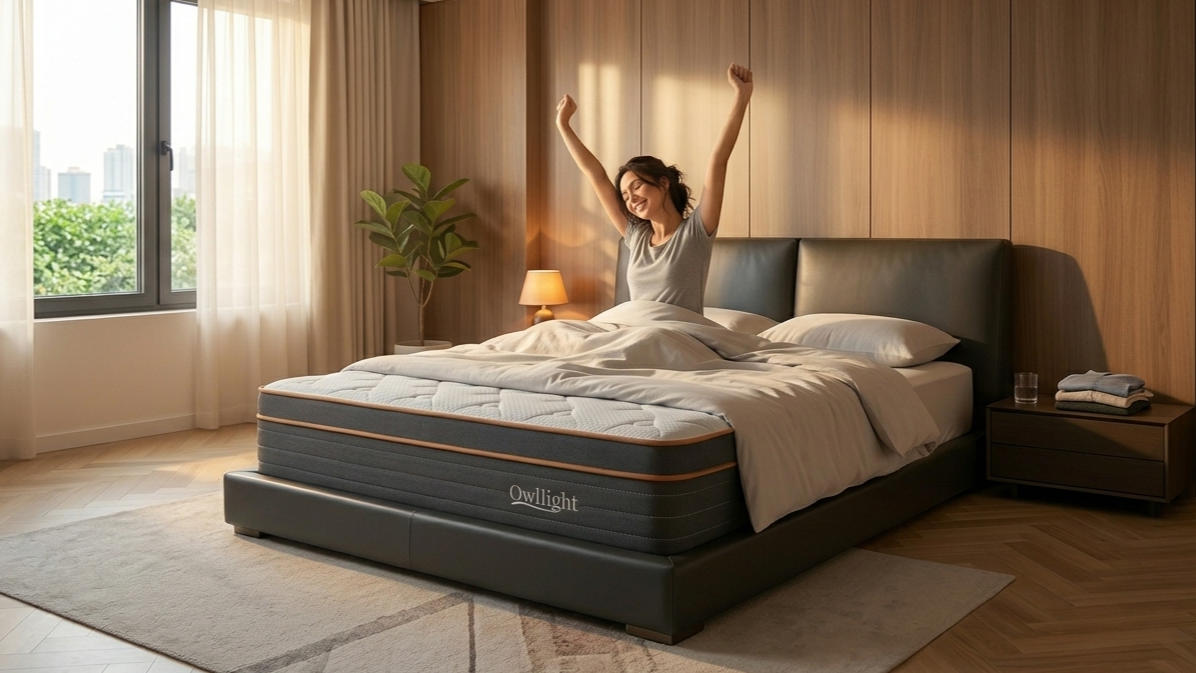
The Tulip Hybrid was built around the back pain problem specifically. The 5-zone pocket spring system provides firmer support under the hip and shoulder zones where body weight is heaviest and softer support under the lumbar zone, where the spine has a natural curve that needs to be maintained, not flattened.
The foam layers above the coils use CertiPUR-US certified material, and the 4D Air Fiber component handles Singapore's humidity by allowing airflow through the sleep surface. It's not a bolt-on cooling feature, it's a structural decision about what sits between you and the spring layer.
The 100-night trial means you can test whether zoned pocket spring support actually addresses your morning back pain. If it doesn't improve in 100 nights, you return it.
See the Tulip Hybrid's full spec and current pricing →
Who Should Choose What
Choose pocket spring (or hybrid) if: You have morning back stiffness. You sleep hot. You share a bed. You want a mattress that will hold its support structure for 8–10 years. You're a back or side sleeper.
Choose memory foam if: You have severe pressure point pain (hip, shoulder) that overrides other concerns. You sleep alone in a cold room. You're a very light sleeper sensitive to any spring movement.
Choose a hybrid if: You want both — and most people with back pain will. Zoned support plus pressure relief, without the heat retention of solid foam.
FAQ
- Is pocket spring or memory foam better for back pain in Singapore?
- Pocket spring is generally better, especially a zoned system that provides different support levels across your body. Memory foam conforms passively but doesn't actively maintain spinal alignment. For Singapore's climate, pocket spring also handles heat better. A hybrid — pocket spring core with foam comfort layers — is the best option for most people.
- Does memory foam cause back pain?
- Not directly — but it can fail to prevent it. Memory foam mirrors your body's shape, including any postural misalignment you've accumulated from desk work. Zoned pocket spring support actively holds your spine in neutral alignment in a way solid foam cannot.
- Why do pocket spring mattresses sleep cooler in Singapore?
- Open space between individual coils allows air to circulate through the mattress as you move. Memory foam's structure limits this airflow. In Singapore's humidity, the heat build-up from foam is noticeably more significant than in drier climates.
- What is CertiPUR-US and why does it matter?
- CertiPUR-US is an independent certification for polyurethane foam, verifying emissions levels, absence of harmful materials, and durability. It matters when buying a hybrid because not all foam comfort layers are independently tested — manufacturer claims aren't the same as third-party verification.